Growing Hardy Orchids: our 3 favorite books

Our favorite book on Growing Hardy Orchids is a best seller from Kew Growing. You will find our Top 3 in this post.

Growing Hardy Orchids (Kew Growing) Paperback – 1 Sep 2011

Authors: Philip Seaton, Margaret Ramsay, Phillip Cribb, Grace Prendergast, John Haggar.

Growing Hardy Orchids

Growing Hardy Orchids introduces an exciting array of orchids from 47 diverse varieties. They can be cultivated in a cool greenhouse or outside, in their rightful place among other temperate garden plants.

This book takes important lessons from the orchids’ natural histories and life cycles. Also, the authors provide practical information.

It covers all aspects of growing hardy orchids:

  • raising plants from seed,
  • vegetative propagation,
  • cultivation in pots and in open ground,
  • coping with pests,
  • diseases and orchid conservation.

By focusing on orchids that are ‘easy to raise’, including hardy hybrids, this great book shows you why you should use orchids in your garden.

About the Authors

Philip Seaton is former editor of the Orchid Review and the author of Growing Windowsill Orchids (Kew Publishing).

Margaret Ramsay is an expert in micropropagation and the reintroduction of endangered orchids into the wild.

Phillip Cribb is a leading orchid specialist and former Deputy Keeper of the Herbarium and Curator of the Orchid Herbarium at the Royal Botanic Gardens, Kew.

Grace Prendergast is an expert on raising hardy orchids from seed.

John Haggar is a preeminent grower of hardy European orchids.

In the same topic, we like very much those 2 books as well:

The RHS Orchids book

[ASA]1405348844[/ASA]

Follow RHS show-how and know-how for orchids that look great all year round with the minimum time and effort.

Inspirational and practical tips and step-by-steps will show you how to choose, grow and care for orchids in your home or garden, from encouraging them to reflower, to arranging them to dazzling effect.

Plus, find an A -Z photographic orchid gallery with in-depth plant profiles and advice on increasingly popular hardy outdoor varieties. Get results, whether you’re a green-fingered guru or a gardening novice. For more step-by-step gardening advice, pick up other titles from this series.

Phytesia is a proud member of the RHS society.

The Orchid Expert: Name that orchid – and get it to flower again

[ASA]0903505673[/ASA]

The Orchid Expert is one of the books in the Expert series written by the world’s best-selling gardening author.

Orchids are the supermodels of the plant world, but how do you look after them? The label is usually not much help. There may be little or no background to what it is or what it needs, and sadly the plants are often thrown away once the flowers have faded.

The Orchid Expert shows you how to get them to bloom again, and so transform them into permanent members of your home. Unique Expert-style diagrams show you how to put a name to that orchid and also reveal the secrets of successful care. Troubles are clearly illustrated and answered, and the weird and wonderful life story of these fascinating plants is explained. With full-page colour photographs of the beautiful and the unusual, The Orchid Expert wipes away the mystery of these magical flowers.

Cypripedium Hybrids: 2 new garden orchids at Phytesia

Cypripedium hybrids are the result of crossing two wild or botanical species. Those orchids are generally distinguished by increased vigor (hybrid vigor).

These hybrids are more vigorous effect, which results in faster appearance of new stems. It is not uncommon that hybrid varieties  manage to produce 10-20 flower stems in a few years.

Nouvelles Orchidées Phytesia

This year, Phytesia offers 2 new Cypripedium hybrids with a wide variety of blooms.

– Cypripedium ‘Michael’ white: is a multi-floral hybrid between Cypripedium macranthos alba and Cypripedium henry. The result is beautiful greenish white flowers. Each stem carries several flowers, with some inherited Cypripedium henry skills.


– Cypripedium Inge ‘: This hybrid combines the strength of Cypripedium parviflorum with the awesome flower Cypripedium fasciolatum. This results in large beige flowers cream-colored size yellow lined with red / brown with a long flowering period.

What to do when I get my Cypripedium?

We advise to replant immediately our perennial orchid at receipt of order. This will prevent the rhizome from drying in the culture pot.

We remind you that the Cypripedium live naturally in cold or very cold areas and support when they are installed in the ground temperatures down to -30 ° C. In addition, they absolutely need winter cold to bloom the following spring. It is therefore not keep them inside a home during the winter. Install them in the garden in summer or autumn, to enjoy acclimatised plants in the spring.

The Cypripedium are generally present in undergrowth in environments which remain cool during the summer. We recommend installing them away from plain sunlight to avoid exposing them to high temperature during the hot hours. A little morning sun or late afternoon is sufficient.

The soil should be light and fresh (especially in summer). The use of mineral substrate (type thin lava) allows the substrate even stay moist during drought.

A single substrate can be achieved by mixing approximately 1/3 of lava rock or pumice, 1/3 ground for aquatic plants (usually containing some clay and sand) and 1/3 garden soil.

Phytesia team is always here to help

Do not hesitate to contact Pascal, the founder of Phytesia, if you have any question at the email address [email protected].

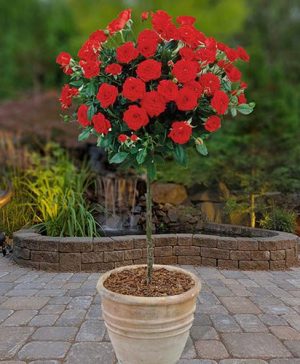
Tulip or Rose, the choice you can make elsewhere

Tulip or rose, a choice you can make with us

Even though nothing is as beautiful as a hardy orchid, you still can get a broad range of tulip or rose varieties at our partners Blooming:

The Tulips


You can see all tulips at this link.

The Roses


You can see all roses at this link.

Tulip or rose, nothing beats a Cypripedium though!

Phytesia & Blooming delivery Information

We use Royal Mail and other carefully selected carriers depending on the size and weight of the parcel. At present we only deliver to the UK. Whatever it is tulip or rose or orchids, delivery charges vary depending on what is ordered. Some outlying parts of the UK may attract a surcharge. You will only be charged once for delivery, irrespective of order size and this will be clearly shown in your shopping basket before checkout. Further details can be found on our ‘Delivery’ and ‘Terms and Conditions’ pages.

Plants are delivered in specially designed protective packaging. Information regarding the identification of varieties – where appropriate – will be included on the pack. Specific delivery times are indicated elsewhere on this page and are dependent on season and readiness of tulip or rose plants. We make every attempt to deliver the whole of your order in one consignment although due to seasonality this is not always possible.

You will receive an email when we process your order for despatch which will also include a tracking code to enable you to track the progress of your delivery.

We guarantee the safe arrival of your tulip or rose plants.

American Orchids: Happy 4th of July America!

You can get the North American orchids at Phytesia. To celebrate the 4th of July, we just got a full American kit of hardy orchids.

American Orchids for your garden

Content of the American Orchids kit

Get an American touch to your garden and pick our 6 garden orchids North American assortment:

Conserving North American Orchids

The North American Orchid Conservation Center (NAOCC) is a collaboration between the Smithsonian Environmental Research Center and the U.S. Botanic Garden that will join public and private organizations to conserve, cultivate and restore North America’s native orchids.

Orchids are found throughout North America and many of the approximately 200 species are threatened or endangered because of habitat loss.

This video is a guide to the Go Orchids web site and explains some basics of identifying native orchids:

Why are orchids so fascinating and captivating?
Beautiful, diverse and often large-flowered, orchids are an ancient plant family that has evolved an amazing array of flower types, pollination mechanisms and complex interactions with animals and fungi. In the plant world, orchids reign supreme as about 10 percent of all plant species are orchids.

Among flowering plants, orchids are the largest family and no other plant family can match the array of evolutionary features that orchids possess. Collectors prize orchids for their showy flowers; scientists have long been fascinated by the relationships between the plants and their pollinators.

Today, orchids have taken on even greater significance – highly sensitive to habitat change, orchids are among the first casualties from environmental loss and damage.

Cypripedium Calceolus in uk

Cypripedium Calceolus in UK is extremely popular. More commonly known as Lady Slipper Orchids, those Cypripedium orchids are a genus of 58 species of Orchid that are widespread across much of the Northern Hemisphere including most of Europe, Russia, China, Central Asia, Canada the United States, Mexico, and Central America.

Cypripedium Calceolus in UK are surviving any tough winter

They are popular among gardeners because they can withstand extreme cold, and can even survive in snowy environments, blooming in spring as the snow melts.

cypripedium-calceolus-lady-slipper-orchid-oc-800-200

They can be planted in pots for container gardening, or in the ground as a low maintenance addition. Watering of your orchids is simple too. They prefer to be watered in the morning or evening, but make sure that you don’t get water on the leaves. Also, if you are container gardening in pots, ensure that your hardy orchids have proper drainage in the pots and that the soil will not retain too much water.

You can get Cypripedium Calceolus in UK at Phytesia’s shop

British Pound’s Brexit Dramatic drop

British Pound Brexit and the dramatic drop in the prices

As you probably know, the British currency suffered badly from the Brexit this Friday 24th.

Today, an awful lot of ecommerce shops have been suspending activities due to the currency exchange cost increase. Some of them have increased the prices up to +15%.

At Phytesia, we decided to stick to the current prices on our website*. We will keep the former price, which is based on the cost of growing our garden orchids during four long years.

We stand with the Great Britain whatever the situation and we hope you have been happy with our service level.

Cypripedium reginae, The Queen Lady Slipper

Cypripedium reginae, more commonly known as Queen Lady Slipper orchid or The Queen’s Lady’s-Spiller, is one of the most easily recognized varieties of hardy orchids. It has white and pink flowers and can grow to a height in the garden of 70-100cm when matured. The flowers are quite interesting, with a pink bucket shaped mouth, and three white petals that open outwards on top like a lid, and one larger white petal that falls to that back of the flower.

Cypripedium Reginae Queen Lady Slipper

The plant is known for its hardy nature, and its perennial, clumping habit. A great addition to a filtered light or partially shaded area, this orchid is a showy and impressive plant that is sure to impress.

The Queen Lady Slipper prefers semi-shaded or filtered light locations in your garden

Lady’s-Slipper orchids prefer to be planted in semi-shaded or filtered light locations of the garden. It is important to put them is areas of the garden that do not receive the hot afternoon sun because they are sensitive to the heat and will not be able to establish in an area where the heat and sun are too great. Their rhizomes should be planted in the ground in the early New Year, January to March, and bloom in April and May. The newly planted rhizomes will take time to adjust in their new environment and shoots of green foliage can be expected to begin showing in April. After about 5 weeks, once the foliage has arrived, blooms will begin to show and continue in through the summer until late June. It is important to make sure that your orchids have enough water during the hottest months of summer because they can become fatigued and may suffer permanent damage if they are left too long without enough water.

As with most other hardy orchids, a Queen Lady Slipper has very specific needs in regards to the soil that it is planted in. Being one of the more demanding species of orchids, it is important to achieve the right soil mixture to ensure that it can reach its potential and survive in the area that it is planted. Soil that is low in organic material and that drains quickly is very important for them so that their roots do not rot and they are able to aerate better through the soil. Soils that contain higher levels of sand or small pebbles are better suited. If the soil is too dense, breaking it up and adding sand or lava rocks will increase the chances of your rhizomes being able to adjust to they new environment.

The size of your Cypripedium reginae gradually increase

As a hardy orchid, once the blooms have faded, and the foliage has yellowed, usually in the fall, the orchids can remain in place through the winter with no need to be removed or covered. Hardy to a temperature of -30°C, these orchids make a great addition to gardens that typically endure colder temperatures during the winter months. Remove any dead foliage from the plant in early winter or late fall, and slow the watering because the plant will not need as much during dormancy. The following year, expect to see them up again in your garden. They naturally clump, and year-to-year you can expect to see the size of your Queen Lady Slipper gradually increase.

10% Easter offer at Phytesia on rare Cypripedium orchids

Garden Orchid 6-pack ❀ Cypripedium Garden Orchids 6-Pack ✿ Rare Orchids

Easter offer for 6 Cypripedium at Phytesia

We gathered 6 Cypripedium Hardy Orchids in a new kit. If you’re part of the Phytesia Club, you will automatically receive a voucher code for this offer (including the Cypripedium 6-pack kit). The offer is available till Midnight on March 29 2016.

The selected Cypripedium rare orchids are:

The 10% promo code is also available on each of the Cypripedium kit‘s orchids.

You can get those 6 rare orchids in promotion this weekend

Insights on growing Cypripedium orchids

Planting your Lady Slipper

Cypripedium prefer soil that is low in organic matter and has good draining properties. Airing the soil is recommended, using a mineral substrate (at least 50%) such as sand, Argex, pouzzolane or ideally lava stone (vulca). As organic matter, a little finely crushed pine bark or some compost based on coconut leaves or fibres could be added.

It is important not only that the rhizomes of the Cypripedium do not desiccate in summer but also that they are not immersed in winter. The various mineral substrates will ensure good moisture retention in summer while encouraging good drainage during the winter.

Exposure for your Cypripedium

In the garden, we recommend planting Cypripedium in a cool, shaded or semi-shaded place. Sunlight at the hottest hours of the day is to be avoided.

Growth Phase of the Lady Orchid

During the winter, the plant persists in rhizome form and does not require any special protection.

The new Cypripedium shoots usually appear during April. Once started, the vegetation grows very quickly; in 3 to 5 weeks, the foliage has opened out. The flowering extends from the end of April to June. At the end of the summer, the foliage yellows then fades before disappearing completely. Cypripedium then go into their winter dormancy.

Over the years and following the successive growth and dormancy cycles, Cypripedium not only become stronger but also multiply, thanks to the annual appearance of new shoots.

This is not an orchid for your kitchen….. but for your garden

Orchids are above all known by the general public as being plants of tropical origin (South America, Asia, Africa…) intended to be kept within our homes, not for your garden. A large number of varieties however exists in this large plant family that can easily be cultivated in our gardens.

We aim for your garden

Hardy orchids belong to this second category. The hardy nature of each species depends on its origin; except for a few genera (Pleione, Calanthe) that are sensitive to the cold, many can withstand temperatures of less than -20°C. So don’t be afraid to keep your hardy orchids outside during the winter. A period of winter cold (maximum 5°C) is necessary for ensuring subsequent optimal growth.

Cypripedium Calceolus for your garden

These plants are characterised by a period of dormancy for most of the winter, but they can also occur in summer (Orchis, Anacamptis, Ophrys…). During these dormancy periods, the hardy orchids remain in the form of a rhizome or an underground bulb. Very often, no more vegetation is visible during this period of the year.
Following the successive growth and dormancy cycles, the orchids not only get bigger and stronger but also multiply, thanks to the annual appearance of new shoots. Their multiplication rate varies according to their genus. The Epipactis are among the most proliferative; installed under good conditions, these orchids can quickly form colonies of many yards over a relatively restricted surface.
Hardy orchids usually flower between September and May, according to the varieties. Once planted under good conditions in the garden, these orchids do not require any special attention and their extraordinary flowering will truly delight you.

Read about plants for your garden with the RHS

[ASA]1405354232[/ASA]

Check out our Hardy Orchids